Archive for the 'Uncategorized' Category

Next Entries »

What Is Happening in India – Between AsiaWheeling 1.0 and AsiaWheeling 2.0

Greetings from India!

Hello, नमस्ते (Hindi – Namaste) and اسلام Ùˆ عليکم(Urdu – As-Salam-Wa-Alaikum). Thought I will open this post like most of our Bollywood movies open – with the title of the film being shown in the three languages – English, Hindi and Urdu. Very symbolic of the secular country that India is.

Now that we are returning to India for AsiaWheeling 2.0, the upcoming series of blog posts attempt to recapitulate and put into context the important events that have happened since. The aim is to orient the wheelers and AsiaWheeling followers to a fresh India understanding and an even more immersive experience than the last time.

Be it BRIC or BASIC, the emergence, then, and the recognition, now, of its power(soft or otherwise) and influence in the world has come to be widely acknowledged and accepted. But what needs to be carefully observed and studied is whether it is indeed the case or is it just rhetoric?

Does India really have what it takes to clean up its home first – improve the livelihood of its people, provide basic living amenities to large sections of its underprivileged population and better infrastructure to the industries, provide better access to health care and education to its young population, foster entrepreneurship and create a sustainable job creation environment, take care of the environment and otherwise improve the quality of life of its people. While the jury is still out on how much progress has happened on this front, we see India increasingly playing a larger and more active role in the world forums, be it the WTO talks or the recent Copenhagen Summit.

Observers and policy-makers expect that the combination of India’s internal growth and the strengthening of its voice in the global arena will propel India into the big league on the world stage.

We will now take a look at different aspects of India’s society, politics, economy and people to understand how they have been shaped in the recent times.

Politics

The one thing which keeps India bound together, apart from craze for the game of Cricket and movies, is the strong and robust democracy. Considering the complexities involved in governing a country like India, it is a matter of pride that by and large, Indian democracy has grown and matured in the 60 years that India has been an independent country. No doubt there are and there will be challenges and some even severe. That India has been able to stave these off successfully and continues to grow, some might say slowly, is because of the strong foundation of democracy and an open culture.

2009 witnessed the world’s largest democratic exercise being conducted in India – the elections to the Lok Sabha, the more powerful lower house of Indian parliament. With an electorate of 714 million, it was a great logistical achievement to have successfully carried off an activity of this scale.

The incumbent United Progressive Alliance (UPA) led by the slightly left of center Congress party came back into power with Dr. Manmohan Singh, an Oxford educated economist widely credited for the economic reforms carried out in the early 90’s, being at the helm of affairs for a second term. These elections also saw a stronger emergence of Rahul Gandhi, son of Rajiv Gandhi (a former Prime Minister) and Sonia Gandhi (current Chairperson of the UPA and President of the Congress Party), grandson of Indira Gandhi (a former Prime Minister) and great grandson of Pandit Jawaharlal Nehru (India’s first Prime Minister) as the next face of the Congress Party. If the Congress does well during the next elections in 2014, he is widely tipped to be the Prime Minister. Concerns are being raised though about such a strong domination of Indian politics by the Nehru-Gandhi family.

Interesting to note that the campaign slogan for the Congress Party was Jai Ho, the anthem from the Oscar-winning movie Slumdog Millionaire, which also won Oscars for two Indians, A R Rahman and Resool Pookutty.

The other front, the National Democratic Alliance (NDA) led by the right of center Bhartiya Janata Party did not do as well as expected and even went on to lose the vote share from the last elections. Inability to put up a united face by its top leadership and the inability to handle an incident of alleged inflammatory speech in one of the most crucial states in India, Uttar Pradesh by one of its young faces, incidentally also from the Nehru-Gandhi family, perhaps cost the party dear.

The campaign approaches of the two main fronts were in stark contrast. While the UPA used the traditional media – print, television, outdoor events to a large extent, the BJP ran an Obama-style internet campaign to connect with the younger audiences projecting the Party President and a former Deputy Prime Minister L K Advani as the party’s PM candidate. The jury is still out on the success or the failure of this campaign, but it is heartening that mainstream politics has understood the need to use technology to reach out to their audience.

While we are on the use of technology in politics and connecting with people, India perhaps already has a success story. Dr. Shashi Tharoor,a former UN diplomant used technology effectively, notably the Internet and especially Twitter, earlier during his campaign for and (now presently in office as) the Minister of State for External Affairs. With over 600,000 followers on Twitter, he is being called India’s Twittering Minister and even Twitter co-founder Biz Stone acknowledges this in one of his regular emails to Twitter users.

A very important aspect of the 2009 elections was the decline of the Left parties that wielded considerable influence in the previous UPA government, though they were supported only from the outside. With the gradual decline of their influence in strongholds like West Bengal and Kerala, one wonders whether their ideologies and policies are still relevant in these times that have seen very fast transformation.

Having said that, Indian democracy definitely needs diverse views and opinions and a healthy debate among those holding different points of view. But then, it is also not very healthy when certain sections holds hostage the government policies to suit their ideologies like the Left did during the last government. With the conservative Left no longer part of the government, there are expectations that economic reforms will gather pace and the government will take a more open approach in its policies toward its people.

In subsequent posts, we will try and cover other aspects of India to help us understand it better.

We leave you with this video of Dr. Shashi Tharoor speaking at the TEDIndia event held in Mysore recently where he talks about India’s soft power and how it’s the people and the culture that make a country strong and not necessarily the military or the economic might. Highly recommended, please do watch.

Welcome to India!

A First Wheel Through the Jakarta Rain

We strolled through the Jakarta airport, with no idea of what to expect. The sloping red tile roofs and lush tropical vegetation looked cheerful enough, but our Indonesian Bureau Chief, Jackson Fu, had alerted us to possible dangers. He was to meet us at the airport, but first we needed to get visas, collect our baggage and negotiate customs. As Jackson explained to us while we were documenting the inventory, this might pose some issues. Corruption was quite rampant in Indonesia we had been told, and it was not uncommon for officials to detain foreigners on trumped up pretenses in hopes of extracting a bribe.
The airport was plastered with signage advertising the administration the capital punishment for those caught trafficking narcotics. I immediately thought of the AsiaWheeling mobile pharmacy, and began to entertain fears that they might mistake it for a covert and illegal drug trafficking ring specializing in anti-malarial medication…
Luckily I was snapped back to reality when a fellow behind us in line (a giant line had formed for visas upon arrival due to some malfunction in the innards of the visa issuing machine) began to chat with me about my ukulele. He was a Taiwanese business man and somewhat of an amateur musician, here to trade garments in Indonesia. As a large team of officials struggled to repair the visa machine (many of them it seemed by staring intently at it), we discussed his business and ours. He offered his assistance when AsiaWheeling finally arrived in Taiwan, some 8 months in the future.
Indonesian Passport Control and Customs proved to be speedy and all smiles. I doffed my panama hat, and made my way to towards baggage claim. The smiling was a welcome trend we would find extended further into our time in here. As we traversed the airport, both employees and other passengers smiled and said things to me in languages I knew none of. We collected our bags and the cycles. Despite the fact that we had neglected to release the air from the tires before checking them, the tires has arrived in tact, and no major damage seemed to have occurred to the rest of the cycle components as well.
Jackson met us looking dapper in the sticky Indonesian heat, sporting a large grin and a relaxed attitude. His driver arrived shortly after, and we loaded our belongings into a the Fu’s Toyota Kijang. The Kijang is the staple car in Jakarta; and the roads and parking garages are packed with them. It was strange, it occurred to Scott and I, to, in such a crowded and narrow land city, to drive only SUVs…. “Flooding,” Jackson explained.
We stared out the windows and I began to draw lines between Jakarta and places that we had traveled in India during the pilot study. Though Indonesia and India were soon to become very different entities, at this point it was the closest data point I had: littered with people, littered with road-side food stands, and littered with litter.
Jackson snapped us back into reality by presenting us with a packet of material that he had prepared: an introduction and itinerary to Jakarta which he had prepared himself (don’t worry, dear reader, copies of this for you are forthcoming); a collection of scans from the lonely planet; indonesian SIM cards, and a bundle of Rupiah for each of us which he had changed in advance. We inserted our SIM cards and were asked to select our religion, as atheism and agnosticism is illegal in this country.  Jackson helped us navigate the menus and successfully initiate our first call.  Needless to say we remain helplessly indebted to this fine Indonesian gentleman.
Jackson’s house is gorgeous and in the city center not too far from the airport. We had heard traffic could become positively heinous in this city, so it was a blessing that we were able to make it back to Jackson’s pad in quick order. After dropping our stuff in his most luxurious room, and refreshing ourselves with some water and a glass of freshly juiced oranges and papayas, we embarked for a wheel.
The Indonesian traffic was dense, hot and raging all around us. We rode with Jackson in search of what he told us was sure to be a startling display of gridlock traffic. Having lived for some of the past year in Washington DC, I was eager to see how much worse it could possibly get.
AsiaWheeling was in full force. This wheel was already equal to or greater in intensity than any we had experienced during the pilot study. Jakarta traffic was a tumult of SUVs motor-bikes and city busses, which roiled through the streets with utter disregard for lanes, traffic lights, or turn signals. Yet, with focus, we found it to be manageable.
As we rode people called out to us, smiled and waved. No doubt half the communications were insults in one light or another, but they were delivered with smiles and in a most urn-threatening way. To be honest, it felt great to be wheeling again. The stresses of planning and leaving, and the myriad of logistical hassles which stood in our path melted away as we pedaled our speed TRs through the boiling hot city.
As we rode the sky began to open and a light but steady rain began to fall.   Traffic was becoming denser, but so was the rainfall, so we decided to turn around for home. A fine first wheel.
That evening, we dined at an imperial restaurant called Bungarampai. it was absolutely delicious. Jackson spent some time debating the menu with the waiter and calling in for support from friends and family on his iphone. In the end we settled on a hot pent salad, a roast duck, a large tower of fried egg and tofu, a plate of stewed vegetables and a hearty fried rice dish.
Full and happy, we retired to a “gothic” restaurant for a drink. The interior felt like a cozy and mysterious brothel, with many layers of red cloth hanging from the ceiling, and islet river running in a geometrically snacking pattern throughout the place. The walls and corners were filled with artifacts: stone statues of Buddhist and hindu gods, old imperialist painting, and rows upon rows of Javanese puppets.  The roof was constructed from found timber, and we speculated as to how old it was. The humidity and the rain in this city, no doubt, age wood quite quickly… in the end we settled on something between 80 and 20 years.
Satisfied and flabbergasted at our good fourteen, we collapsed into bed to slept the sleep of men contented with the world.

Jakarta from the Air

We strolled through the Jakarta airport, with no idea of what to expect. The sloping red tile roofs and lush tropical vegetation looked cheerful enough, but our Indonesian Bureau Chief, Jackson, had alerted us to possible dangers. He was to meet us at the airport, but first we needed to get visas, collect our baggage and negotiate customs. As Jackson explained to us while we were documenting the inventory, this might pose some issues. Corruption was quite rampant in Indonesia we had been told, and it was not uncommon for officials to detain foreigners on trumped up pretenses in hopes of extracting a bribe.

The airport was plastered with signage advertising the administration of capital punishment for those caught trafficking narcotics. I immediately thought of the AsiaWheeling mobile pharmacy, and began to entertain fears that they might mistake it for a covert and illegal drug trafficking ring specializing in anti-malarial medication…

Luckily I was snapped back to reality when a fellow behind us in line (a giant line had formed for visas upon arrival due to some malfunction in the innards of the visa issuing machine) began to chat with me about my ukulele. He was a Taiwanese business man and somewhat of an amateur musician, here to trade garments in Indonesia. As a large team of officials struggled to repair the visa machine (many of them it seemed by staring intently at it), we discussed his business and ours. He offered his assistance when AsiaWheeling finally arrived in Taiwan, some 8 months in the future.

Indonesian Passport Control and Customs proved to be speedy and all smiles. I doffed my panama hat, and made my way to toward baggage claim. The smiling was a welcome trend we would find extended further into our time in here. As we traversed the airport, both employees and other passengers smiled and said things to me in languages I knew none of. We collected our bags and the cycles. Despite the fact that we had neglected to release the air from the tires before checking them, the tires has arrived in tact, and no major damage seemed to have occurred to the rest of the cycle components as well.

Jackson met us looking dapper in the sticky Indonesian heat, sporting a large grin and a relaxed attitude. His driver arrived shortly after, and we loaded our belongings into the  Toyota Kijang. The Kijang is the staple car in Jakarta; and the roads and parking garages are packed with them. It was strange, it occurred to Scott and I, to, in such a crowded and narrow land city, to drive only SUVs…. “Flooding,” Jackson explained.

We stared out the windows and I began to draw lines between Jakarta and places that we had traveled in India during the pilot study. Though Indonesia and India were soon to become very different entities, at this point it was the closest data point I had: littered with people, littered with road-side food stands, and littered with litter.

Jackson snapped us back into reality by presenting us with a packet of material that he had prepared: an introduction and itinerary to Jakarta which he had prepared himself (don’t worry, dear reader, copies of this for you are forthcoming); a collection of scans from the lonely planet; Indonesian SIM cards, and a bundle of Rupiah for each of us which he had changed in advance. We inserted our SIM cards and were asked to select our religion, as atheism and agnosticism are illegal in this country.  Jackson helped us navigate the menus and successfully initiate our first call.  Needless to say we remain helplessly indebted to this fine Indonesian gentleman.

Selecting Our Religion

Jackson’s house is gorgeous and in the city center not too far from the airport. We had heard traffic could become positively heinous in this city, so it was a blessing that we were able to make it back to Jackson’s pad in quick order. After dropping our stuff in his most luxurious room, and refreshing ourselves with some water and a glass of freshly juiced oranges and papayas, we embarked for a wheel.

The Indonesian traffic was dense, hot and raging all around us. We rode with Jackson in search of what he told us was sure to be a startling display of gridlock traffic. Having lived for some of the past year in Washington DC, I was eager to see how much worse it could possibly get.

Woody in Traffic

AsiaWheeling was in full force. This wheel was already equal to or greater in intensity than any we had experienced during the pilot study. Jakarta traffic was a tumult of SUVs, motor-bikes, and city buses, which roiled through the streets with utter disregard for lanes, traffic lights, or turn signals. Yet, with focus, we found it to be manageable.

Woody and Jackson

As we rode people called out to us, smiled, and waved. No doubt half the communications were insults in one light or another, but they were delivered with smiles and in a most un-threatening way. To be honest, it felt great to be wheeling again. The stresses of planning and leaving, and the myriad of logistical hassles which stood in our path melted away as we pedaled our speed TRs through the boiling hot city.

As we rode the sky began to open and a light but steady rain began to fall.   Traffic was becoming denser, but so was the rainfall, so we decided to turn around for home. A fine first wheel.

That evening we dined at an imperial restaurant called Bungarampai. it was absolutely delicious. Jackson spent some time debating the menu with the waiter and calling in for support from friends and family on his iPhone. In the end we settled on a hot pent salad, a roast duck, a large tower of fried egg and tofu, a plate of stewed vegetables and a hearty fried rice dish.

P1051215P1051213P1051210

Full and happy, we retired to a “gothic” restaurant for a drink. The interior felt like a cozy and mysterious brothel, with many layers of red cloth hanging from the ceiling, and a little river running in a geometrically snaking pattern throughout the place.

P1051239

The walls and corners were filled with artifacts: stone statues of Buddhist and Hindu gods, old imperialist paintings, and row upon row of Javanese puppets.  The roof was constructed from found timber, and we speculated as to how old it was. The humidity and the rain in this city, no doubt, age wood quite quickly… in the end we settled on something between 80 and 20 years.

P1051242

Satisfied and flabbergasted at our good fortune, we collapsed into bed to sleep the sleep of men contented with the world.

Best of AsiaWheeling

The adventure had drawn to a temporary close when Woody and Scott boarded flights in Incheon airport. The trip had been a wild success. With over 22 cities under our belt, you, dear reader, might think we had caught our limit. To the contrary! A new, even more savage trip is just about to get underway. Stay tuned as we approach 2010 and the launch of the next AsiaWheeling. In the meantime, feel free to peruse the highlights of what might now be called the AsiaWheeling pilot study.
Or… try starting at the beginning.

Welcome To Varanasi

Scott, Nikhil and I awoke to find the Swantaranta express running two hours late (which in Indian for on time, I believe) and that Scott had caught a case of what we might not so affectionately call the “Agra hustle.” Though Scott seemed to be recovering rapidly, the my dear partner in crime needed sleep and water to replenish his strength. We knew not exactly where we were to be staying in Varanasi, but had been in contact with a local ashram, recommended to us by a Mr. Oliver Daly who had, for some time, been occupied there. As we exited the cool comfort of the train and immersed ourselves in the grimy heat of Varanasi, it was decided that this Ashram would be made our first waypoint in the city.

Nikhil quickly propagated through the crowd of touts and rickshaw drivers, which filled the train station, collecting along the way one fellow who was to be our driver for the day. Nikhil and this driver lead us out into the packed dirt parking lot. The air smelled strongly of woodsmoke, in addition to the normal Indian cocktail of scents: open sewers, cooking spices, and pan. Ah, pan, I don’t know if I have yet described to you this most singular element of Indian life. And indeed at this point in our tale, I was rather ignorant of the stuff myself. I knew of it only these 3 things: it was made of, among other things, beetlenuts and beetle leaves, it caused a large amount of deep red salivation to occur in the mouth of the fellow who imbibed it, and smelled distinctively and strongly enough to play a leading role in the already quite savage Indian bouquet.

Streets of Varanasi

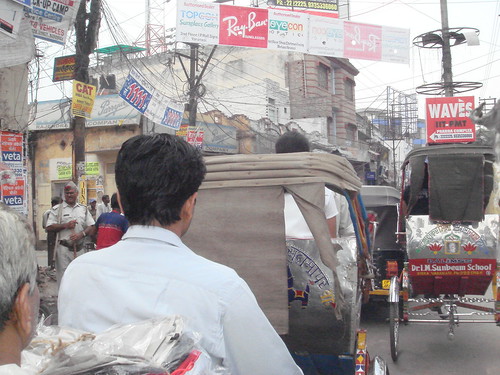
Through this bouquet we barreled, in an ailing autorickshaw, which our driver started by jerking a great lever on the floor of the machine, and which –we found out when he stopped mid-trip to buy 40 rupees (~$1) of petrol– required motor oil to be mixed with it’s fuel. The streets of Varanasi were crowded, but filled much more predominantly with bicycle rickshaws and cattle than motorized traffic. And what motorized traffic there was tended to be either large machinery (dumptrucks, etc.) or auto-rickshaws. We arrived first at the Little Stars School, which was located some distance from the city center, in a more residential neighborhood. We were greeted warmly there and upon learning of Scott’s illness, Asha, who heads the school, offered to make a healing rice and lentil mixture to sooth his stomach. In addition we were told that indeed we would be welcome at the ashram, located farther downstream, on the banks of the ganges. I will once again let pictures speak for the beauty of that place.

Bal Ashram

And eclipsing even the beauty of the premises itself, was the kindness and welcome with which we were received there. All there walked barefoot on the fine marble floors, and every time I passed another person within the walls of the ashram, I was acknowledged with a pressing of the hands together, a slight bow of the head and the word “namaste.” I later found that this word was a reference to the god, and the oneness present in the two exchanging the greeting. It felt good.

We were told our room was being prepared, and we were offered spicy milky tea and food. When our room was ready, Scott proceeded to sleep vehemently. Nikhil and I retired to the ashram dining area where we sat crosslegged on wooden boards, and ate a monstrous traditional indian meal from gleaming stainless steal plates.With Scott out cold, Nikhil and myself decided to take in the city on our own. We exited the gates of the ashram where our driver had, at our request, been waiting. We found him sitting overlooking the great river and smiling. We piled back into the rickshaw and off we went.

The whole while I was transfixed with the bizarre world of Varanasi. It was a feast for the eyes: dogs, cattle, oxen, buffalo and crows roaming the streets; brightly dressed women, in dramatic sarees of fine silk; men in stark white gowns and large turbans; men sleeping on piles of brick; children digging sewage from open gutters; bicycle rickshaws carrying absurd loads of brick, or piping, or oil cans; groups of 4 or 5 people crammed on a tiny motor bike, men with their heads wrapped in linen, so that only a slit remained from which to see; and women wearing all black, with a black covering for the head which had no� slit through which to see!, but yet they strode confidently through this amazing traffic.

During my transfixion, Nikhil was talking up a storm with our driver, a very fine gentleman by the name of Babaloo Baba, who it seems had now taken a partial role as tour guide in addition to our driver for the day. Our first stop was at a house of fine silks. Babaloo Baba turned onto a narrow cobblestone lane which bounced the little rickshaw quite terribly. Nakhil explained to me how it was done inside such a place. “We must look at many things and find a number of things that we are interested in. These will go in a pile, which later we can pare down to those we actually with to purchase.”And so it began. We removed our shoes and entered the ancient building. We sat cross legged on a giant mattress, which extended to all four walls of the room. All around us were placed the most intensely colored, beautifully patterned, and most elegantly textured fabrics I had ever seen, or for that matter, can even conceive the existence of. The owner of the shop, a rounded man in a deep orange silk shirt, sat with us ordering around a small harem of young boys which fetched silks so that he could dramatically unfurl them before us. We hemmed and hawed, chose a pile of things and then Nikhil went into intense haggling mode. His face turned to a sorrowful frown and he began to peer into his wallet shaking his head while saying very many things in hindi, not the least of which was “student”, and “nay nay nay”. After some bargaining, we finally agreed on a price and the man set his minions forth packaging the silks in little blue plastic bags, which were then covered with tape and cryptic ball-point pen. The entire parcel, which has some surprising weight to it was then placed in a larger bag, while Nikhil went through the process of paying with a credit card.Silks in hand, we were then taken by one of the boy minions on a tour of the silk manufacturing operation.

Sewing Silk Designs
Silk Loom

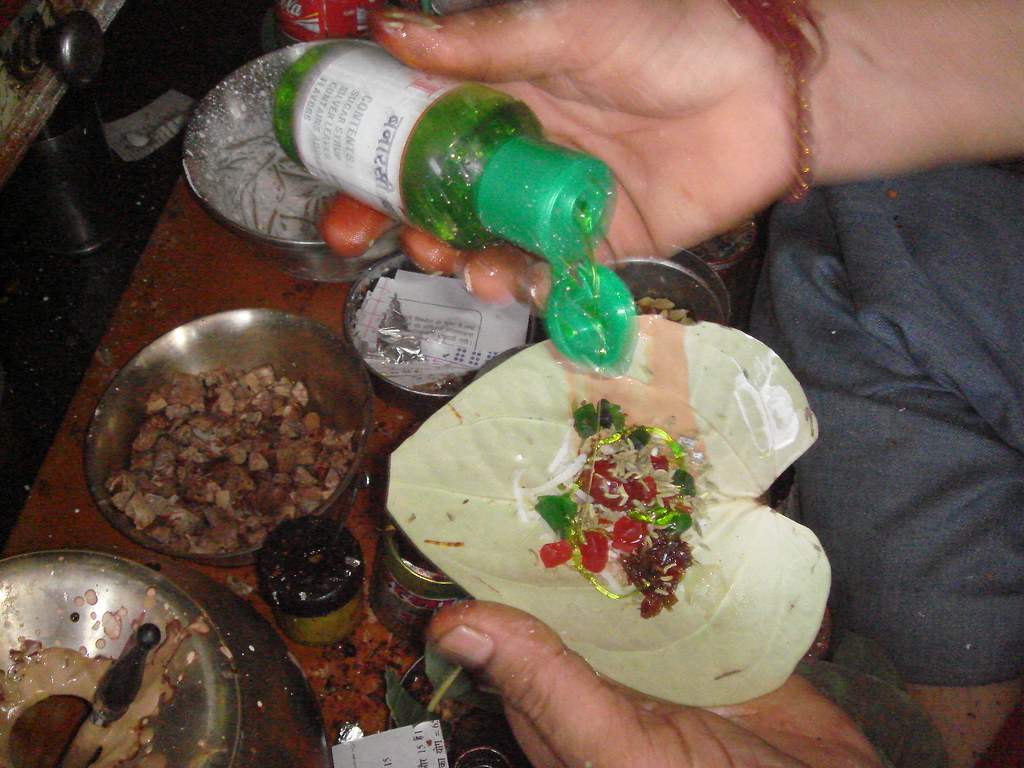
This consisted of many men in dark stone dwellings, located throughout the tiny winding streets of Varanasi. We invite you to see for yourself.Next, Babaloo Baba most verbosely drove us to a temple. At the entrance gate, we removed our shoes, cellphones, camera, matches, and anything else which might be used to defile the place, and proceeded to walk through the metal detectors. On my way through, they discovered a USB key drive in my pocket, and having never seen one before, promptly confiscated it (Nikhil was able to retrieve it upon our leaving). Inside the temple was filled with monkeys, laying around, playing with each other, or eating bits and scraps from the vicinity. I followed Nikhil through the temple. He approached a number of kiosk like stone booths, decorated with flowers and offerings to the gods, and covered with elaborate engraving and statues. At each of these, he was performed a kind of spiritual transaction, which involved a small ladelfull of a holy water. The water was poured into his open hand. Some of it he drank in a quick slurp, the rest he smoothed over his hair. Also at the temple was a giant tree, which must have, at some point, been submerged in earth much farther up its trunk, for now many long roots hung from the hulking trunk which, some 3 feet above our heads, bulged out to twice its size at foot level. All over this tree were strings and ribbons fastened there in the name of wishes, in hopes they would be later fulfilled by the gods associated with this temple. In the event that these wishes indeed came true, an offering would be made at this temple in thanks.As we left the temple, a glance at the watch showed it was getting near time to return to Scott’s side. “Just enough time to have a pan,” Nikhil said. So Babaloo Baba drove us to a pan man and I began to marvel at the manufacture of this strange item. A man sat cross legged in a little alcove in a crumbling wall, near a busy street. A crowd was gathered there and he was furiously manufacturing pan, and Indian man were eating it up just as fast. First a pan leave was taken from a large pile covered partially with a torn piece of burlap. Then, from a vast array of tiny jars and metal tins, he began to fill the leaf with a sprinkle of this, a sprinkle of that.

Pan Making

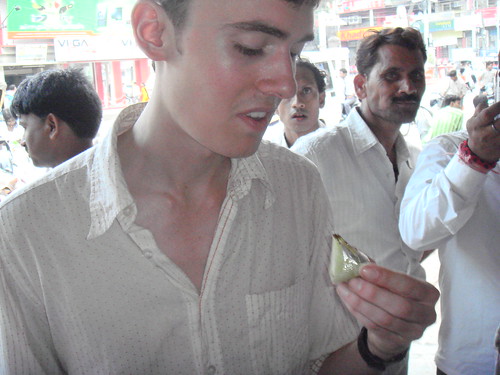
A number of hammered copper vessels had small brushes protruding from them, and he used these to spread a number of different pastes on the leaf. Finally he wrapped it up and placed a piece of silver foil over the top of it, to keep it closed. From his other side he grabbed a banana leaf. Wiping the leaf on his pants until it had a obtained a mellow shine, he placed the final product atop and presented it to Nikhil. “So watch me. This is how it’s done.” He placed it into his mouth and began to chew. His lips bulged, and he slurped in a little air, then he was done. Next, he handed one to me. I must admit, it looked ominous, like a tiny pandoras box, sleeping for now upon the early gleaming banana leaf…

Here We Go...

In it went.

Eating the Pan

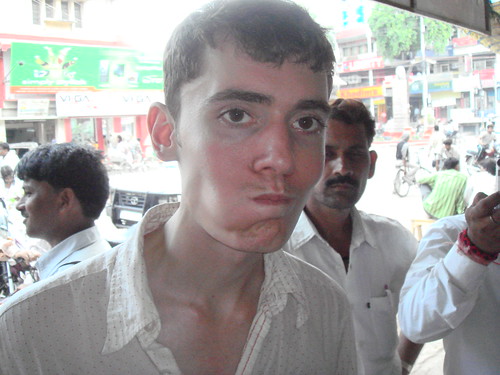
And for the time, I genuinely enjoyed the flavor. I cannot describe it any better than to say it was sweet, strong, and tasted distinctly red. I spoke through the mouthful redness, “so I just swallow it?” Nikhil nodded. Perhaps the act of eating the pan had endeared him to me, or perhaps he thought the the pan would impair my ability to cross the street, regardless, Babaloo Baba now grabbed my arm and lead my through the onslaught of scooters and rickshaws to our vehicle.

Babaloo gives me a hand

As we drove back I felt the pan in my stomach unpacking its tools and getting to work. As Nikhil explained to me, “muscles in your stomach that have not been used in a very long time are grumbling, saying ‘what is this stuff.'” Indeed… indeed.

Dash To Delhi

We checked out of the hotel Amar in Agra and caught an auto-rickshaw to the train station. When we got there we found our train to be delayed by 30 minutes. As they were announcing this news, Scott was intercepted by a fellow with a wooden box full of little instruments, not the least among them were shoe cleaning and polishing materials. Though Scott’s canvas shoes were not in need of (or indeed capable of) any polish, we asked the good sir if he might by any chance be able to repair my backpack the chest strap of which had been ripped of by a over-zestfull baggage attendant on my way from California. Upon hearing our request, the man pantomimed as though changing his hat, and proudly presented himself to us as a certified repair doctor, and to be very reasonably priced. So we agreed and he proceeded to rage on the location from which the chest strap had left, slicing it apart into its components using an old razor blade. In 20 minutes time, and much complaining about how damned sturdy my baggage was, he had re-sown the the thing to an approximation of good as new.

We thanked the fellow and he haggled us up to 100 rupees. Off we set only to find the screens of the Agra train station proclaiming our train was now delayed 3 hours. I quick calculation revealed that such a delay was getting dangerously close to cutting out our planned visit to Kaustubh Shah:s Delhi residence and even placing us in danger of meeting our train to Varanasi, and rendezvous with head snake charmer and Bangalore office chief Nikhil Kulkarni. Also of interest was the availability of “Bogie’s Position” on the information display.

Bogies Position

As the heat of the day began to dig in, we set to solving the problem. We were pricing cab fares to Delhi from Agra when the Malarone we had taken about an hour earlier kicked in, and with it, the slow clutch of impending doom. What doom? you may ask, dear reader… well we too were asking that very question. Sensing the weakness, the driver we were talking with kicked his end of the conversation into overdrive. So we agreed to pay the fellow 2500 rupees to get us to Delhi in 3 hours. We took a look at the cab, asked for non-AC to save some dough, and soon I was passing said cash to a grumpy man in a white box in the parking lot. It turned out the man were talking to was not the driver at all, but a salesman. And our driver was introduced to us. In exchange for our 2500 rupees, we were given a little slip of paper “to sign and give to this driver when you arrive.” Our belongings had been loaded into the taxi that we had been shown, but after I had payed, they were removed and placed in a smaller cab. Our driver then got in that cab, and another man climbed in shotgun. “this man is a police officer. He is just going as far as the boarder.” Scott asked for his ID, and it looked legitimate. “You will need to pay 100 rupees at each checkpoint. It is like a tourist tax.” With stomachs full of ice, we pulled onto the roads of Uttar Pradesh, headed for Delhi. I tried to nap and not to play through scenarios in my mind: kidnapping, stealing of our organs, slaughtering us in the name of all the dirty tourists who were ever ass-holes to the Indians.

And as I drifted in and out of consciousness, the crazy hour passed. The police officer got out at the boarder, and smiled at us thanking us for the ride. Horses passed and the cars was delayed a number of times, by herds of cattle, traffic jams etc. But after about 4 hours we were entering Delhi.

Ice Cream Cart

Delhi is massive and sprawling. I saw the first traffic light I had seen since California (though it seemed to be broken). Everywhere people were building. Delhi is constructing an impressive new subway system, which demanded huge holes be dug at what seemed like every street corner. Our driver quickly became hopelessly lost, requiring many more than 2 calls to Kaustubh’s house, so a member of Mr. Shah’s staff could give directions in Hindi. Finally, we were on the correct road, at house 32 and the numbers were falling as we went, moving us ever closer to the fabled building number 23 (which was by the way directly across the street from the Turkish Ambassador’s residence). Despite this, our driver drove slower than ever, and stopped repeatedly to ask for directions. We tried to tell him it was just ahead, but then it dawned on us: this neighborhood has only English street signs. Our driver could not read English and as such, was baffled. But after waiting almost 6 hours and eating only little snacks (like “magic chapata” flavored potato chips), we pulled into the drive and were met by Kaustubh’s father heading out to go do business, he was immaculately dressed in a monogramed cornflower blue shirt and looked cool despite the sticky Indian heat. He paused to smile and shake hands, and was quickly on his way.

Kaustubh's House

A well spoken man who introduced himself as Mr. Ashwani piled our luggage, Scott, another member of the staff, myself and his fine self into a small elevator. And up we went. The next moment were were standing, filthy and disheveled in an elegant apartment. Bowls of dried flowers delicately scented the apartment. Smells of fine Indian spices wafted from the kitchen and we were shown to an immaculately set table, with silver dishes. We were immediately served a steaming bowl of blended broccoli soup, accompanied by fresh buttered toast. Then came a green salad, the first such dish we had dared to eat in some time. Then the feast cam: a succulent chicken curry, fresh cucumber raita, mellow dal, roasted potatoes, spiced cauliflower and the fluffiest most flavorful basmati rice I have yet encountered. Needless to say, we were madly sated. Just as we were considering falling into the internet, our phone rang. It was non other than Nikhil Kulkarni, chief snake charmer and Bangalore office head for asiawheeling global. This meeting was one I had been most excitedly anticipating.

And Nikhil did not disappoint. His relaxed and gentle attitude, paired with sharp whit and keen instincts made him a tremendous asset to the team. Our ability to have a great time had just been increased by an order of magnitude. We had barely shaken hands by the time we were invited back into the dining room and served another meal of tomato soup and lightly grilled sandwiches, filled with herbs and goat cheese.

Now full to the point of bursting we piled in a cab bound for the Delhi station. At the station, Nikhil pointed out to us a singular phenomenon. Those people who wished to travel in the general compartment had lined up all the way down the platform. The train was idling, empty, and men were pacing back and forth with bamboo staffs, keeping these travelers in a tight line. Each member of the line looked frantic, clutching his baggage, in some cases his wife, and the fellow in front of him. Nikhil explained that each member of the line clutches the one in front of him in order to avoid people cutting. And as a second line of defense, there were the men with the staffs. We watched as many people attempted to cut in line. Some were extracted and beaten, others managed to squeeze in successfully.

Unreserved General Compartment

Still others jammed some personal item through the barred windows of the general compartment in order to secure a seat via precedent. When the train doors opened all hell broke loose. People scrambled to get into the car, the men with staffs tried in vain to keep things orderly, and most fascinatingly, this phenomenon just kept going indefinitely, the line being so long and the disorder so great.

Soon we grew tired of watching and made out way to the first AC car and our luxurious state room. We had no sooner deposited our luggage on the floor that the sound of a scuffle brought my eyes up to the window on our stateroom door. The sight I saw in it is not one I will soon forget. A young woman, hair soaked in sweat and eyes wild with the crazed fear of a cornered animal, locked her gaze onto my own from where she was being awkwardly hustled along in the arms of two men. My mouth fell open and I realized I was staring now at a blank window. I shook my head and was about to address my cabin-mates, when suddenly our stateroom door burst open and in came the girl, carried by two men, who sputtered something in broken English about them having some mandate for use of the room.

The girl was placed on our long bench, covered in sweat and still staring wildly into the infinite, eyes darting around in her sockets, but looking at nothing. One of the men with us explained, “This girl’s father has just died on the platform, and she has been seeing the body.” We, of course, told them they could have the room for as long as they required and picked up our valuables, leaving them the bottles of water we had just purchased. Nikhil rushed off to consult the conductor and soon the two of them appeared together, talking animatedly. After assuring many parties, whose affiliation to the girl and/or the deceased was unclear, that we would be fine with sitting in Nikhil’s adjacent stateroom for as long as was needed.

And that we did. It was one of Nikhil’s first very wise insights into Indian culture. “In India, emotion is worn completely on the exterior; when we are happy we sing and dance, when we mourn we allow it all to pour out.” Before too long our room was once again free and we settled in for the night, as the Saraswati Express whisked on through the steamy Indian night.

Pondicherry Wheeling

Lodgings

Day 2 in Pondicherry began with us donning our new Khadi shirts. Khadi, as I understand it, is a symbol of Indian independence from Britain. In the days when India was a British mercantile colony, the Brits would grow and harvest cotton in India and take it elsewhere to be spun into garments. These garments, often ill fitting the heat of the Indian climate, would then be sold back to the Indians at unreasonable prices. Mahatma Ghandi, as part of the Indian independence movement, promoted Khadi, or homespun cotton garments, made by surrounding villagers. These garments were much thinner and well suited to the hot and humid Indian summers. They are also, by the same token, rather translucent. So it was with only mild self consciousness that I left the hotel and joined Scott on our bicycles headed for his old office when he lived in Pondicherry in 2006.

Kammachi Amman Koil

The Business was called BookBox, though it was their non-profit side-project, planet read, that Scott worked on. We pedaled through the streets of Pondicherry, which where eerily empty. It was a Saturday morning at 10am, so we figured perhaps things were just sleepy. We stopped into a favorite restaurant of Scott’s, Bombay Meals, which, unlike many around it, appeared to be open. The owner, was lounging in the empty interior, but sent us away saying he might be open at 7pm, but no earlier. Somewhat confused, we decided to postpone breakfast and ride over to PlanetRead. When we arrived, I was impressed with the operation, and their admiration for Scott was clear. The office cook made some nice hot south Indian coffees for us and we retired to a comfortable room in the back of the office to examine some of the new products. BookBox creates digital storybooks in many languages, to be used as language teaching materials. We spoke also of new plans for expansion into language tools for the hearing impaired using the same technology. As we finished the coffee (which was splendid), we were asked if we wanted to sit in on the noontime meeting, and whether Scott would give a short speech (no particular topic was suggested). Scott of course agreed and we also agreed to join them for lunch (despite warnings of possibly excessive spice levels).I consider myself a hardened eater of spicy food, but I was expecting to be blown out of the water by the intensity of Indian spicy-ness. Not so. While the food here bursts with flavor and balanced spice.

Poundtown
It is far from gratuitous, and, in fact, more often than not milder than the raging food we used to cook back in Providence for “Sunday: Chicken and Bowling.” Though you, dear reader, cannot see, I have become choked and weepy at the mere mention…Scott’s speech was great. The highlight for me was when he quoted Henry Ford, “If I had asked people what they wanted, they would have said they wanted a faster horse…” Had he asked me, I’d have said I’m perfectly happy with my 30 pound steel atlas bicycle and panama hat.The meal was splendid: a rich chicken biryani, a stainless steel pot of curry, and splendid raita. At least here in the south, raita is nothing like the thin glop we have come to know and love at Indian restaurants in the united states, rather it consists of just two ingredients: chopped onion and yogurt, each in about equal proportion, and it is thick like coleslaw. Also it is ridiculously delicious. On the streets of Pondicherry and Chennai you can see men slicing onion with such furious precision, sweeping onion after onion aside into a giant pile waiting to become raita.Also during our visit to the BookBox headquarters, we discovered the reason for the empty streets and the closed restaurants. The entire nation had been called to strike that Saturday, in protest of recent increases in patrol prices. So we set out for our wheel, unimpeded by the usual traffic and mayhem which adhere to the city streets. Our wheel took us out into the fisherman’s neighborhood.

Fishing Boats

As we rode, the road changes from concrete to sand, and the building changed from crumbling brick and cement to palm leaves, jagged sticks, and bits of plastic. Though everywhere we go we get plenty of looks (two attractive young men in panama hats and oversized sunglasses riding bicycles –also we are the only white people), but this was a new level of attention. As we rode people called our to us in Tamil and children came over to touch the bicycles and babble at us or just wave. Most of those we passed simply stared though, with expressions ranging from mildly interested to confrontational.I must admit the experience of visiting the fishing village was emotionally tiring.

Tamil Signage

And to boot, we had been riding in 100+ degree heat with no water since all the shops were closed. As we rode back into the city we passed an ashram called Sri Aurobindo.

Thrice cycles

We parked the bikes and removed our shoes in the designated area on the other side of the street and walked across the burning hot cobblestones to enter the ashram. Not a word was permitted to be spoken inside so we simply followed the person ahead of us to a large stone table upon which an intricate image had been assembled from different cut flowers. A man walked ceaselessly around the table, waving a bundle of burning incense. All around us were small gardens and stacks of potted plants. A man with two long wispy brooms wandered sweeping dust and dried leaves from here to there, so that people could sit on the stone ground.And this we did. Again, I enjoyed the experience. I am not sure if I can say that I meditated, but I certainly found the experience to have a calming and centering effect which linger some time after the experience itself. With all the shops still closed, we left the ashram and rode the city searching for water. After some time we found a nescafe stand on the beach which sold us some bottles.

South Indian Coffee House

The effects of the water on my system were every bit as strong as the sit we had in the ashram. And for this first time in many hours we resumed laughing and joking, while we made our way back the the hotel.

Norcal Wheeling

AsiaWheeling Mobile Offices: Emerald Hills, Northern California

After a brutal headwind kept me airborne for some 7 hours, my flight from Boston arrived in San Fransisco, and I pulled open the door of a gleaming silver Acura to see Scott smiling at me behind a pair of giant sunglasses.

Scott Raging

The California shown bright and warm all around us. Immediately, we set about taking stock and charting out our last couple days in America. We needed to change currency, acquire some Panama hats, and spiff up the blog.� Notice the delightful new theme? (notice the even newer theme?) a� Scott Norton original, buy travel insurance, go wheeling hard, mail off AsiaWheeling t-shirts, pack, chill, breath, and gird our loins in general.

Woody in the Jeep

I found Scott’s home to be gorgeous and comfortable and his family both gracious and friendly. We borrowed a fine bicycle from a Dr. Jeff Norton (no relation) which served us well on a savage wheel through Scott’s Woodside, Portola Valley, Stanford, downtown Palo Alto, and back up to Emerald Hills.

Post Wheel

While its true we technically leave the country tomorrow, as you can see, AsiaWheeling is already well underway…

Bangalore Office Is Now Back To Life. All Set For Wheeling!

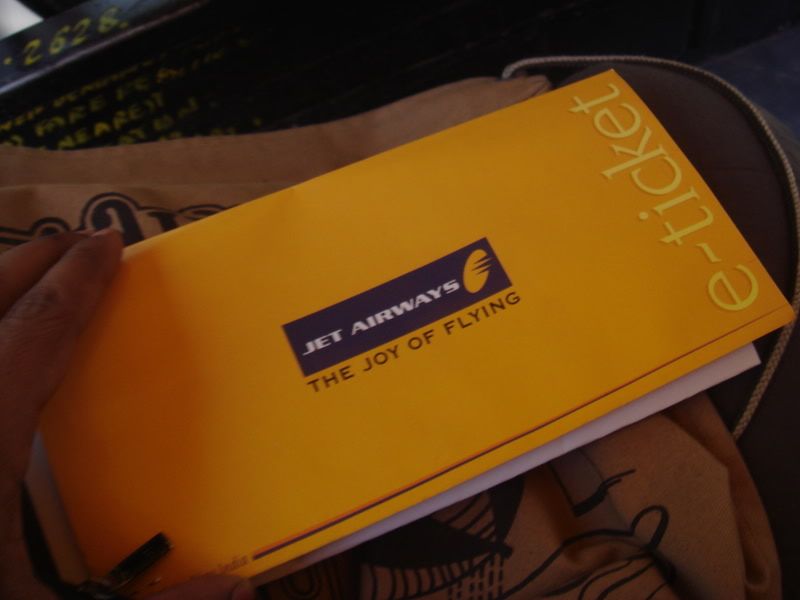
The Bangalore office, till the point this post was started to be written, was practically dead. Except for the occasional rising to life to perform something worthwhile – booking the train tickets for the India part of the wheeling and rickshaw-ing to the Jet Airways counter at the now closed HAL Airport in Bangalore to reschedule the Principal Wheelers’ tickets from Kolkata to Hong Kong, life here has always been dull and subdued. While the Chief Snake Charmer would like to conveniently blame the inclement weather in Azerbaijan and the reduction in the diameter of urban water supply pipes in Kosovo, he now has every reason to believe that there was no need for him to be that slothful. Be it the lethargy in booking the train tickets or the inordinate delay in sending the text in Hindi for the t-shirt and the business cards, the Chief Snake-charmer did not quite do justice to the august company he is in. The Chief Snake-charmer has every mind to kill himself, but is hoping to redeem himself by playing a good host to the Principal Wheelers’ while they are here in India. The train ticket booking happened just in time to get confirmed tickets. The Wheelers otherwise would have had tickets in RAC or in the Waiting List. That’d have made for a great adventure and a couple of interesting blog posts, but the India bureau would like the Wheelers to have better adventures and not the ones which would involve haggling with the Ticket Examiners on The Great Indian Railways. Neither does the Chief Snake-charmer, based on his previous experiences, looks forward to such adventures in the near future and nor does he want the Wheelers to go through those.

The India Bureau would like to thank the ever-so-dependable Mr. Srinivas of Venkateshwara Travels, Domlur, Bangalore for his kind help in booking the train tickets. Though like every honest Indian, he charged a commission slightly higher than what he is entitled to, his promptness in booking the tickets on being informed by just a phone call reposes our faith that if one knows the right people in India, things can be arranged and fixed without much worry. No doubt these services come at a slight premium, but there’s also a lot of relationship building that goes into cultivating such contacts. So be it any kind of tickets – bus tickets to travel back home to Dharwad, movies tickets to watch movies with Adi, train tickets for the North East Trip, help is just a phone call away in the form of Mr Srinivas.

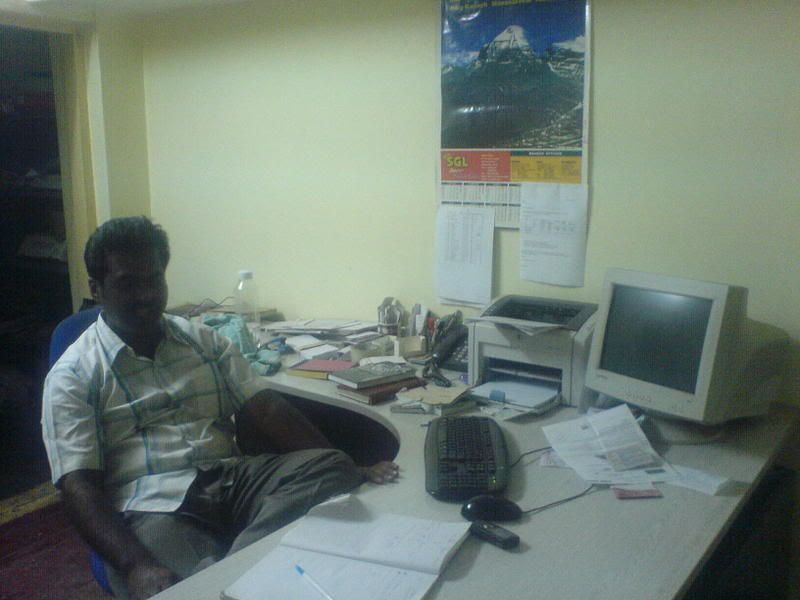
Ladies, Gentlemen and the gentle ones among the ladies, here’s presenting to you Mr Srinivas and his modest office.

Mr. Srinivas


Mr. Srinivas majestically seated on his throne!

Mr. Srinivas


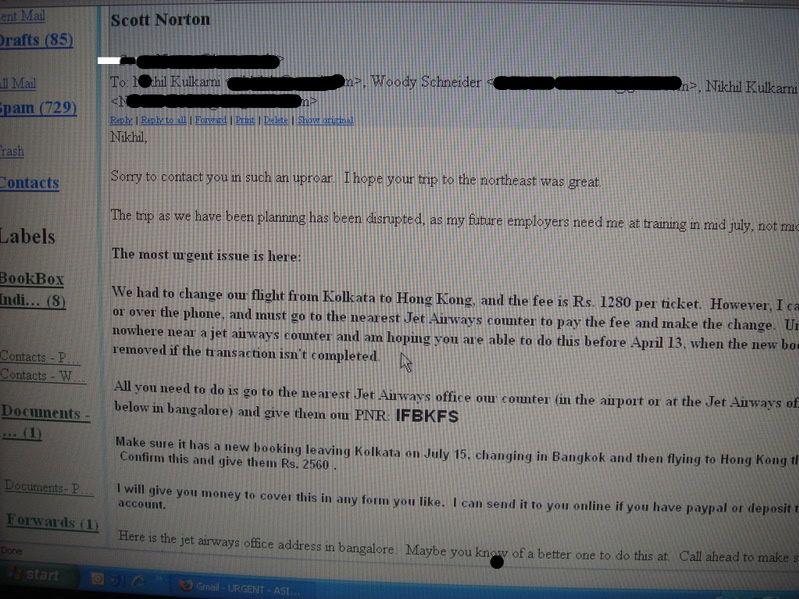
Only God and The Chief Snake-charmer know what earth-shattering work The Chief Snake-charmer had that made him sit over the e-mail from one of the the Principal Wheelers Mr. Norton for over a week. As Mr. Norton mentions here, it was regarding the re-scheduling of their flight tickets from Kolkata to Hong Kong by Jet Airways. Blessed was the earth that Saturday, the 12th of April, that the Chief Snake-charmer finally mustered enough energy to reach the Airport. Calls were made to the Jet Airways counters to confirm if such transactions could happen at the Airport counter, otherwise the Chief Snake-charmer would have to go the Jet Airways office for this. It was only after pressing the first eight combinations of the numbers on the key panel of the mobile phone that the Chief Snake-charmer was able to get through to a human on the other side. Such are the funny ways of these IVRS systems. On being explained of the transaction to be done, it took ten minutes and eight seconds for the Customer Care Executive to get back after confirming from her officials. Get back she did, and also confirmed that the Chief Snake-charmer could get the re-scheduling done at the Airport.

What followed next was eventful indeed but not as difficult as exaggerated by one of the Wheelers in this post.

Enter Nakil Kulkarni, head of the AsiaWheeling Bangalore office, and Chief Snakcharmer for AsiaWheeling global. As always, Nakil’s reputation precedes him, in the same way lightning precedes thunder. So you, dear readers will find it no great surprise that, against fantastic odds, Nakil traversed miles of treacherous terrain and plunged himself into intense negotiations on our behalf with officials at said airline. After some hours a deal was struck, and AsiaWheeling once again enjoyed the calm which precedes an upcoming storm.

There’s only one way of getting things done in India – that of getting them done. It doesn’t matter what the means is, but if something is to be done, it will be done. And a word given is a word given and will be kept at all costs. Unknown people turn up at unexpected times to offer help, and what use is it of being The Chief Snake-charmer if one cannot do something as simple as rescheduling airline tickets? The Chief Snake-charmer felt very humbled and slightly humiliated after coming across glowing praise of him and issued the following press release.

First things first, The Chief Snake-charmer’s name is Nikhil, and not Nakil! The Chief Snake-charmer is deeply disturbed at the blog post titled Our Bangalore office proves invaluable once again posted on the Asiawheeling blog on April 22, 2007. The blog mentions of how Chief Snake-charmer – against fantastic odds, … traversed miles of treacherous terrain. The Chief Snake-charmer would like to mention here that there were no odds set on this airport trip of his as the betting houses in Bangalore were closed that Saturday. Hence the mention of odds is misleading and readers are advised to take note of the same. Also, the terrain that the Chief Snake-charmer had to traverse was not treacherous, but was a smooth, well-laid road from 13th cross in Indiranagar to the HAL Airport, covering the Double Road, the 100 Feet Road and the Airport Road. Yes, it took some negotiations and a few hours for the deal to be struck at the Airport, but the tone of language in the blog posts suggests that a Herculean effort went into getting the re-scheduling done, while it was not so. It was difficult no doubt, but that’s the best part about getting things done here in India, of getting things done. Wheeler Mr. Norton would know of this best, having been a part of the team that pulled off the spectacular cultural performance at the Hebballi School, while it seemed totally impossible the previous day. The Wheelers are henceforth requested to refrain from using such humiliating language while writing about the Chief Snake-charmer. The Chief Snake-charmer wishes to remain as humble as ever and continue to quietly serve AsiaWheeling in his capacity as one of the members of the Board of Advisors.

Ok, that was a lot of crap. 276 words, 1346 characters with no spaces, 1621 characters with spaces, 2 paragraphs and 18 lines to be precise. To put it in a nutshell, the one who has completely gone nuts, The Chief Snake-charmer, is glad that he could be of some help.


Here is the photographic evidence of the preparations the Chief Snake-charmer made for the smooth(hopefully!) organisation of AsiaWheeling.

1. See the e-mail from the Principal Wheelers for the 234th time. Finally decide to move one’s arse.

Scott email

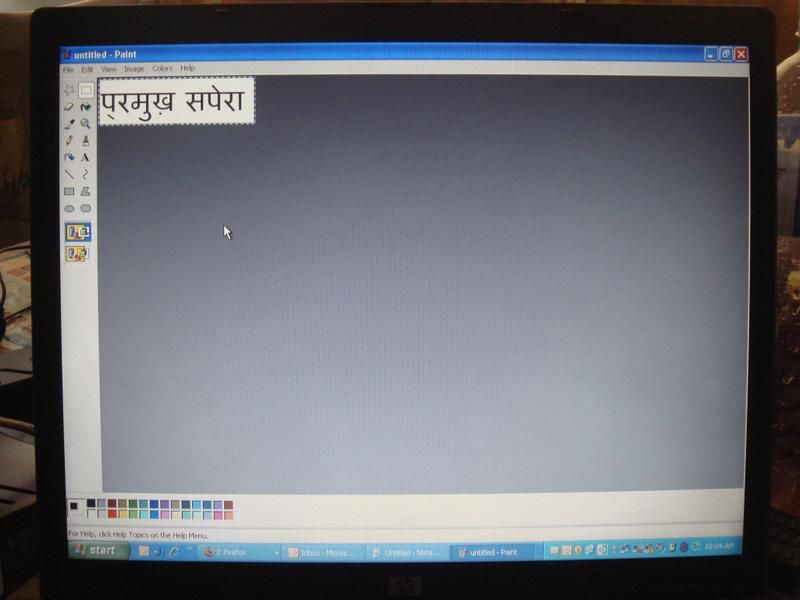
2. Move one’s hands also and make the Hindi text for Chief Snake-charmer

Snake Charmer

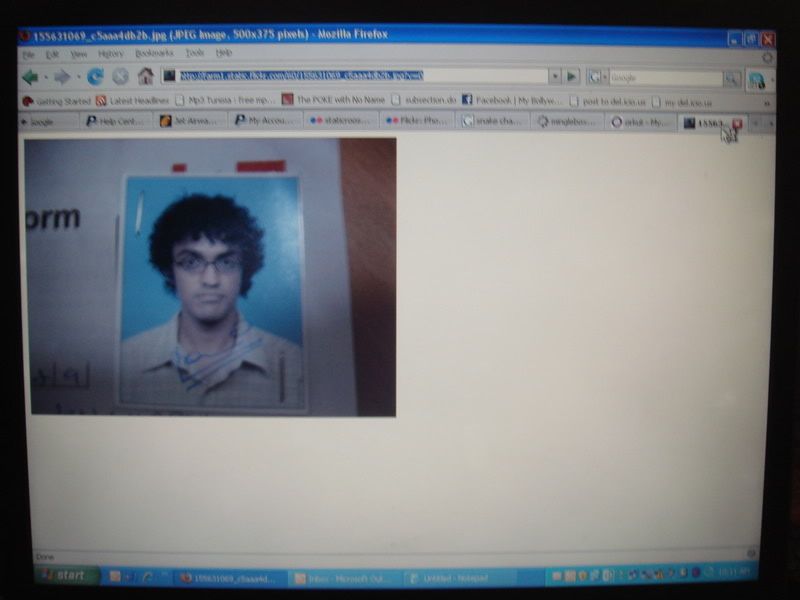
3. Dig out an old image for the business card –

Old Nikhil

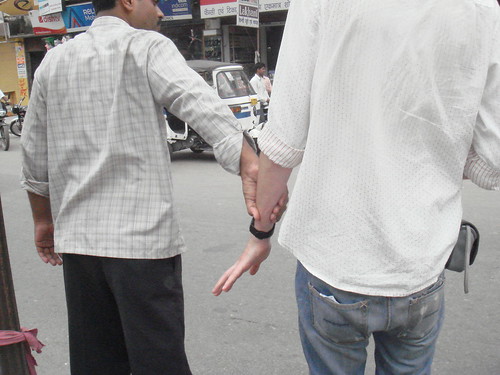
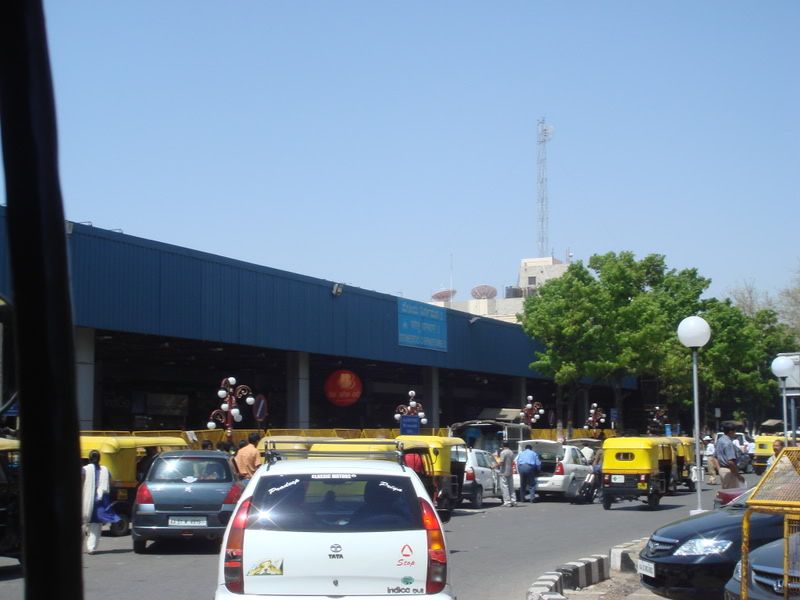
4. Hire an auto-rickshaw, reach the HAL Airport

Airport

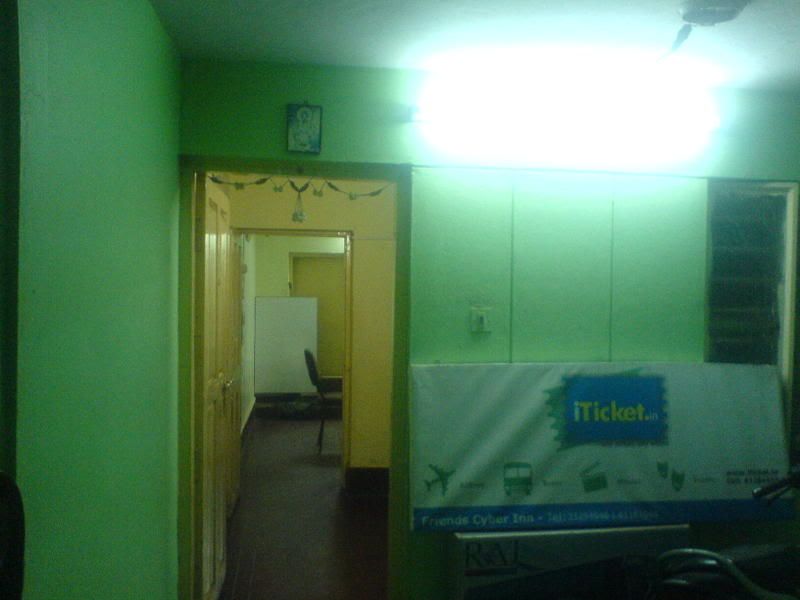
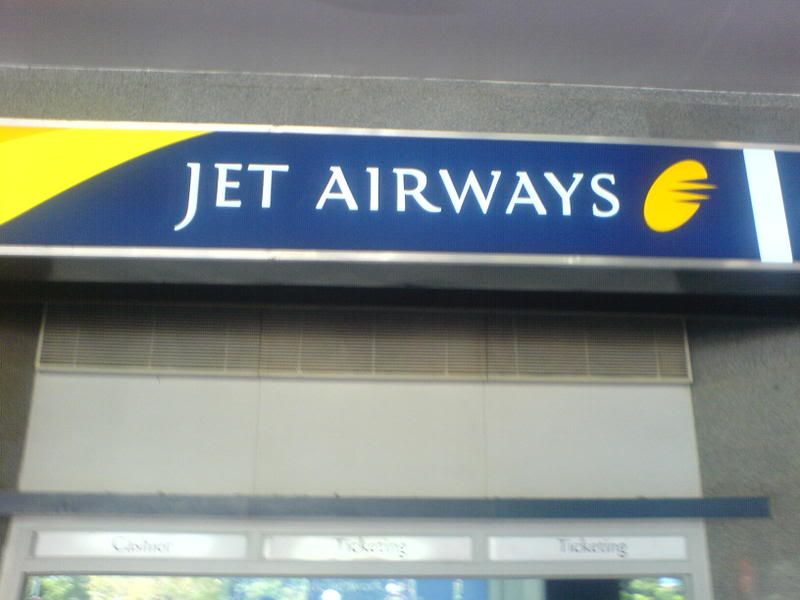
5. The Jet Airways counter at the airport

Jet Counter

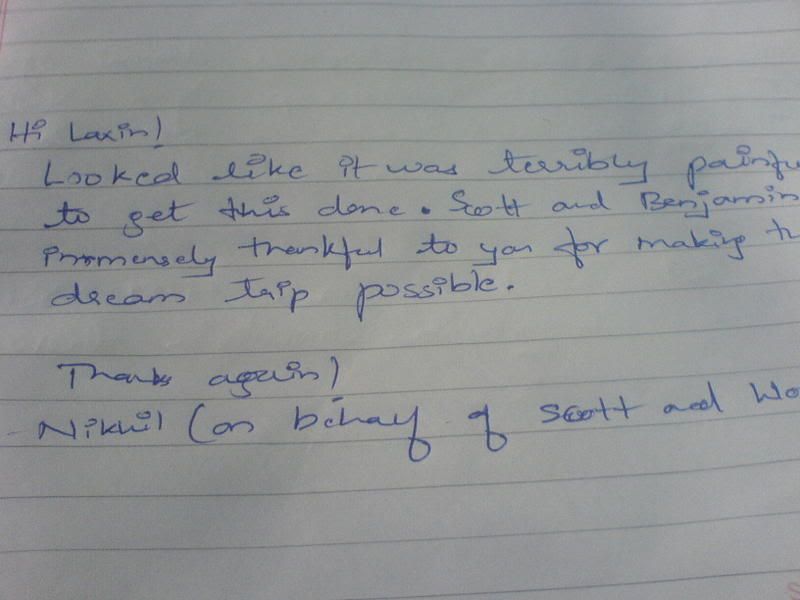
6. Being the gentleman that the Chief Snake-charmer is(are any ladies listening?!), he writes a Thank You note to Laxin, the helpful lady at the counter.

Thank You Note

7. Tickets done!

Tickets

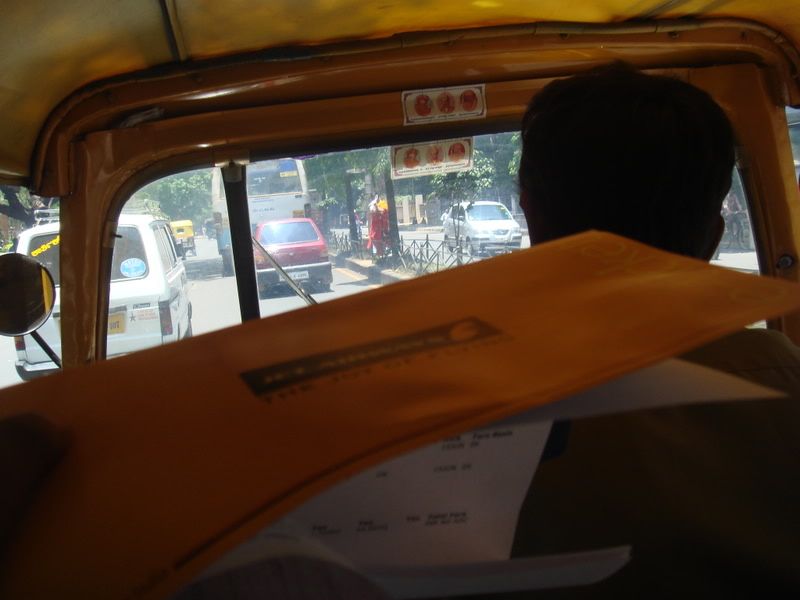
8. The auto-rickshaw ride back

Ride Back

This is news just in!

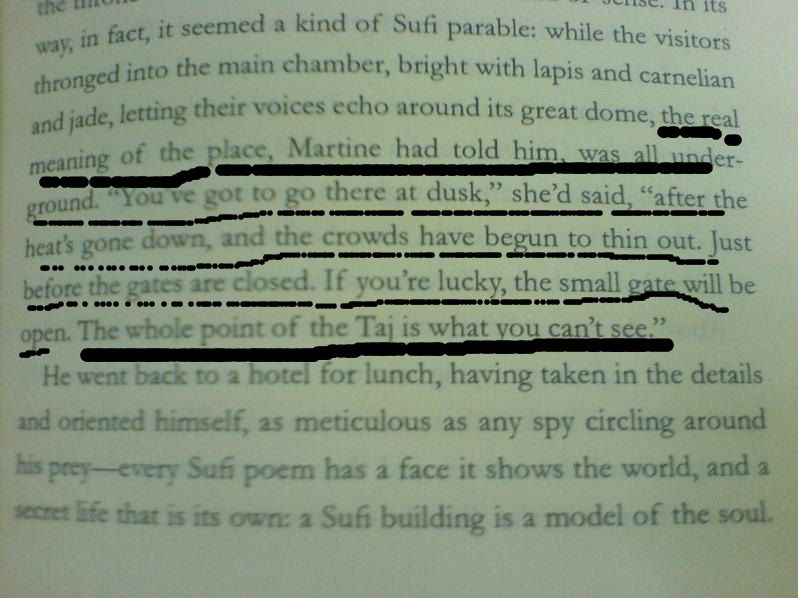
Looks like the Chief Snake-charmer won’t be able to travel to Agra with the Principal Wheelers, but there’s something about Agra he wants the Wheelers to know about and insists that they do this while they are in Agra. This comes from a book the Chief Snake-charmer is currently reading – India In Mind edited by Pankaj Mishra. It’s a collection of excerpts from works of mosly ‘foreigners’ who’ve written about India. It’s a piece by Pico Iyer from his novel Abandon.

The Taj

The Chief Snake-charmer hopes the Wheelers will see what others don’t see. Better still here’s a glimpse of what it might look like, at 1:44 in the following video from The Bucket List –

[youtube:http://www.youtube.com/v/OltHNarHA9A]

The Chief Snake-charmer wishes he could join the Wheelers on the trip to Agra and see the Taj for the first time, but commitments at work are holding him back. But he’s glad his good friends are doing it and looks forward to joining them in the later part of the Wheeling.

PS. Just so that we know, Wheeler’s, A H Wheeler & Co rather, is a book chain selling books across railway stations in India.

PPS. Don’t know what the problem is, but was not able to embed that video!

Our Bangalore office proves invaluable once again.

As much as anything else, this trip will be an experiment in rolling with the punches. While we have spared no time in the meticulous planning of this endeavor, we recognize also that much must be left to chance. Our first flirtation with that fickle mistress occurred some days ago when your corespondent Mr. Scott Norton received an unexpected communication informing him that his subsequent employer would be requiring his services, beginning at the unanticipatedly early date of July 13th.We immediately set to reformulating the plan.Some things were for sure: we could not cut our visits to Varanasi, or the Sunday market in Kashgar. So we began to assemble a new itinerary.The gods were with us for the time, as we were able to construct without too much difficulty a new itinerary, which achieved these goals. Major components to be cut were the entire west and norther components of the India portion of the trip and bicycling across South Korea.nikhil_temp.jpg

Having already purchased tickets from Kolkata to Hong Kong on Jet Airways, we needed to change those reservations. Yet, after some conversation with Jet’s customer service executives, we discovered this task could only be done in person. Enter Nakil Kulkarni, head of the AsiaWheeling Bangalore office, and Chief Snakcharmer for AsiaWheeling global. As always, Nakil’s reputation precedes him, in the same way lightning precedes thunder. So you, dear readers will find it no great surprise that, against fantastic odds, Nakil traversed miles of treacherous terrain and plunged himself into intense negotiations on our behalf with officials at said airline. After some hours a deal was struck, and AsiaWheeling once again enjoyed the calm which precedes an upcoming storm.May we, your humble correspondents, never cease to be reminded that we ride only on the shoulders of such giants as comprise the AsiaWheeling board of advisers.

Next Entries »

Privacy Policy | Terms and Conditions